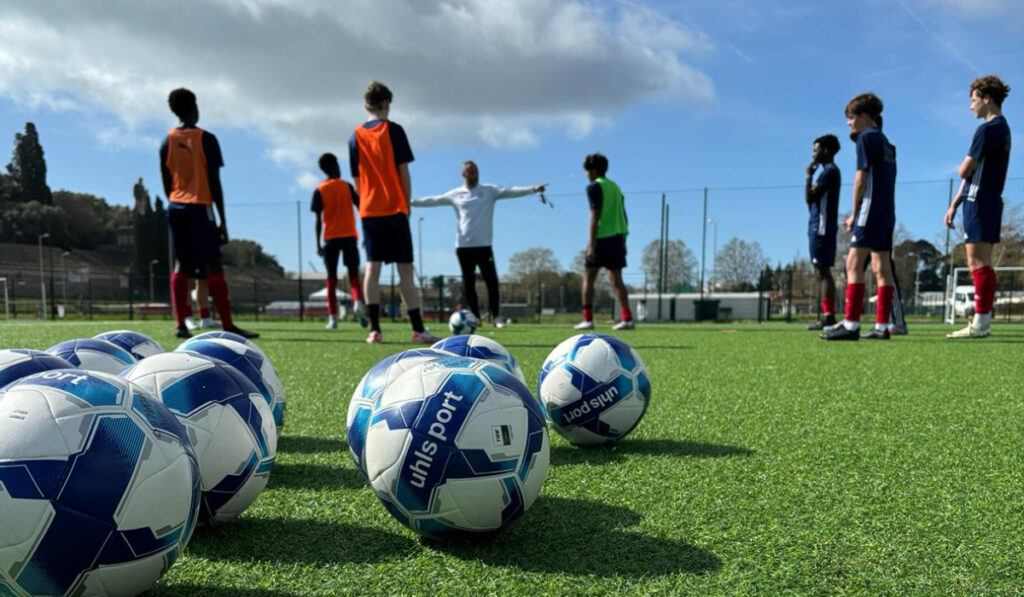
With youth football development, asking “Is my child developing normally for their age?” is totally normal. At Ballrz we hear this all the time.
Every football parent asks this. You watch other kids at training and wonder: should my 9-year-old be able to do that? Is my 12-year-old behind? Are we expecting too much too soon?
Youth football development isn’t a race. It’s a journey with predictable stages—but those stages look different for every child.
This guide explains what to realistically expect at each age from U6 through U16, based on the FA’s Long Term Player Development (LTPD) model. You’ll learn what’s normal, what’s advanced, what’s concerning, and most importantly: how to support your child’s development at every stage.
Understanding the FA Long Term Player Development Model
The FA’s LTPD framework divides youth development into stages, each with specific physical, technical, tactical, and social characteristics.
The Four Stages:
- Foundation Phase (U6-U8): Fun, fundamental movements, introduction to football
- Development Phase (U9-U11): Learning core skills, small-sided games
- Skills Phase (U12-U16): Technical refinement, tactical understanding, competitive mindset
- Performance Phase (U17+): Specialization, elite pathway (not covered here)
Key principle: Development is about long-term improvement, not winning at age 8.
U6-U7: Foundation – First Touch with Football
Physical Development
What you’ll see:
- Limited coordination (trips over own feet)
- Short bursts of energy followed by fatigue
- Still developing balance
- Can’t sustain focus for more than 5-10 minutes
- Large movements (can’t control small adjustments yet)
What’s normal: Players running in swarms to the ball (“bunch ball”). No positional awareness.
What’s advanced: A child who can dribble in a straight line without looking at the ball constantly.
Technical Skills
Expected milestones:
- Running with the ball (any part of foot)
- Kicking ball in general direction of goal
- Basic stopping the ball
- Attempting to dribble around cones
Not expected yet:
- Passing to teammates deliberately
- Using weaker foot intentionally
- Any kind of tactical positioning
Tactical Understanding
Realistic: “Kick ball toward goal” is the entire tactical understanding at this age.
Unrealistic: Expecting passing patterns or defensive positioning.
Social/Emotional
- Football is about fun and friends
- Will lose interest quickly if not engaged
- Cries when frustrated (totally normal)
- Doesn’t understand team concept fully
Red Flags at U6-U7
- ❌ Coaches drilling technique repetitively (boring for this age)
- ❌ Standing in lines waiting for turns
- ❌ Emphasis on winning over fun
- ❌ Parents shouting instructions during games
What Helps Development
- ✅ Lots of ball touches (every player with a ball)
- ✅ Games and activities (not drills)
- ✅ Variety (keep changing activities)
- ✅ Positive reinforcement
U8-U9: Foundation – Building Basic Skills
Physical Development
What you’ll see:
- Better coordination than U6-U7
- Can run and change direction without falling
- Starting to develop agility
- Attention span: 10-15 minutes per activity
- Still tire quickly (short games better than full matches)
Growth spurts: Some kids shoot up in height, others stay small. This affects speed/strength temporarily. Don’t worry—it evens out by U12-U13.
Technical Skills
Expected milestones:
- Dribbling with some control (mostly dominant foot)
- Passing to teammates (if reminded constantly)
- Basic shooting technique emerging
- Starting to use weaker foot occasionally
- Can receive a pass and control it (mostly)
What’s advanced:
- Consistently using both feet
- Looking up while dribbling
- Deliberately shielding the ball
Tactical Understanding
Emerging concepts:
- “Pass to someone in space” (starting to understand)
- “Don’t all chase the ball” (beginning to grasp)
- Basic defending (stay between ball and goal)
Still realistic: Bunch ball happens. Players lose positions constantly. That’s normal.
Social/Emotional
- Starting to understand team concept
- Wants to play with friends
- Loses motivation if shouted at
- Responds well to encouragement
- Begins to notice who’s “better” at football
Red Flags at U8-U9
- ❌ Complex tactical instructions (they won’t remember)
- ❌ Overemphasis on results (winning at this age doesn’t predict later success)
- ❌ Specialization in one position (kids should try everything)
What Helps Development
- ✅ Small-sided games (3v3, 4v4)
- ✅ Maximum touches on the ball
- ✅ Positive coaching (mistakes are learning opportunities)
- ✅ Rotating positions
U10-U11: Development Phase – The Golden Age of Learning
This is the most important age for technical development. Kids’ brains are wired to learn movement patterns. What they learn now sticks forever.
Physical Development
What you’ll see:
- Significant improvement in coordination
- Better balance and agility
- Can sustain activity for 20-30 minutes
- Pre-puberty (most kids haven’t hit growth spurts yet)
- Wide variation in size (some kids look 8, others look 13)
Technical Skills
Expected milestones:
- Confident dribbling with both feet
- Passing accurately over 10-15 yards
- First touch control improving
- Can strike ball with laces (proper shooting technique)
- Beginning to use skill moves (step-overs, feints)
- Understanding of when to dribble vs pass
What’s advanced:
- Consistently using weaker foot in games
- Scanning before receiving ball
- Comfortable receiving with different surfaces (chest, thigh)
Tactical Understanding
Major development stage:
- Understanding of basic positions (defender, midfielder, striker)
- Concept of team shape
- “Show for the ball” (creating passing angles)
- Defensive positioning (marking players)
- Counter-attacking mindset emerging
Still realistic: Players lose positions when tired. Tactical discipline inconsistent. That’s normal.
Social/Emotional
- Strong team identity developing
- Competitive drive emerging
- Starting to care about results (winning matters now)
- Comparing themselves to others more
- Sensitive to criticism (needs to be constructive)
Red Flags at U10-U11
- ❌ Playing full 11v11 (pitches too big, too many players, not enough touches)
- ❌ Overtraining (more than 3 sessions per week risks burnout)
- ❌ Results-obsessed coaching (winning at expense of development)
- ❌ Early specialization in one position only
What Helps Development
- ✅ Small-sided games (7v7 or 9v9 format)
- ✅ Technical practice with game context
- ✅ Encouragement to try skills in matches
- ✅ Playing multiple sports (aids coordination)
U12-U13: Skills Phase – Puberty Arrives
Warning: This is when physical development becomes wildly varied. Some kids are 5’8″, others are 4’10”. Some have adult strength, others are still pre-pubescent.
Physical Development
What you’ll see:
- Huge variation in physical maturity
- Growth spurts (some kids grow 6 inches in a year)
- Temporary loss of coordination during growth spurts
- Increased strength and speed (for early developers)
- Higher injury risk (growing bones vulnerable)
Early developers: Physically dominate now, but this doesn’t predict adult success.
Late developers: Get frustrated being outmuscled. They often catch up and surpass by U16-U17.
Technical Skills
Expected milestones:
- Solid first touch under pressure
- Can pass accurately with both feet
- Effective dribbling in 1v1 situations
- Shooting technique consistent
- Basic defending technique (tackling, blocking)
- Heading (if physically ready—never forced)
What’s advanced:
- Consistently scanning before receiving
- Able to play different positions effectively
- Making quick decisions under pressure
Tactical Understanding
Real tactical learning begins:
- Understanding team formations (4-4-2, 4-3-3)
- Positional responsibilities clear
- Defensive shape and pressing triggers
- Transition play (attack to defense, defense to attack)
- Set piece understanding (corners, free kicks)
Social/Emotional
- Self-consciousness increases (worried about making mistakes)
- Peer comparison intensifies
- Winning becomes very important
- Some lose confidence (especially late developers)
- Need to feel valued by coach and teammates
Red Flags at U12-U13
- ❌ Only playing early developers (late bloomers get discouraged and quit)
- ❌ Overtraining (4+ sessions per week risks burnout and injury)
- ❌ Specialization too early (multi-sport athletes develop better)
- ❌ Excessive pressure (this is still grassroots, not professional)
What Helps Development
- ✅ Understanding puberty affects performance temporarily
- ✅ Judging players on technique/decision-making, not just physical dominance
- ✅ Building confidence in late developers
- ✅ Proper rest and recovery (at least 1 day off per week)
U14-U16: Skills Phase – Sorting Themselves Out
By U16, most physical development has leveled out. Late developers catch up. True ability becomes clearer.
Physical Development
What you’ll see:
- Most players through puberty by U16
- Physical differences still exist but less extreme
- Coordination returns after growth spurts
- Adult-like strength and speed emerging
- Can train harder and more frequently
Technical Skills
Expected milestones:
- Confident with both feet in matches
- Comfortable receiving under intense pressure
- Can execute skill moves effectively
- Shooting with power and accuracy
- Solid defensive technique
- Can play multiple positions competently
What’s advanced (potential academy level):
- Exceptional vision (sees passes others don’t)
- Consistently makes correct decisions under pressure
- Standout technique (clearly better than peers)
Tactical Understanding
Full tactical maturity emerging:
- Deep understanding of team tactics
- Can adapt to different formations
- Reads the game (anticipates what will happen)
- Effective in specific roles (holding midfielder, target striker, etc.)
- Understands pressing, counter-pressing, build-up play
Social/Emotional
- Clear sense of football identity (are they “good” or not)
- Some decide to pursue football seriously
- Others shift focus to social/recreational aspects
- Peer group very important
- Need autonomy (don’t want to be micromanaged)
Red Flags at U14-U16
- ❌ Training 6-7 days per week (burnout territory)
- ❌ Single-sport focus year-round (increases injury risk)
- ❌ Unrealistic academy expectations from parents
- ❌ Coach doesn’t adjust for players’ maturing needs
What Helps Development
- ✅ Challenging opposition regularly
- ✅ Tactical learning (watching football, video analysis)
- ✅ Individual development plans
- ✅ Strength and conditioning (proper program)
- ✅ Mental skills (dealing with pressure, setbacks)
What Parents Get Wrong About Development
Myth 1: Early Success Predicts Later Success
Reality: The kid dominating at U10 is often just physically mature early. By U16, late developers frequently catch up or surpass.
Myth 2: More Training = Better Player
Reality: Overtraining causes burnout and injury. Quality over quantity. Two focused sessions better than five mediocre ones.
Myth 3: My Child Needs to Specialize Early
Reality: Multi-sport athletes develop better athleticism, avoid burnout, have fewer injuries. Specialization before age 13-14 is counterproductive.
Myth 4: Position Specialization Should Happen Young
Reality: Players should try all positions until U13-U14. Playing in goal teaches decision-making. Playing striker teaches finishing. Playing defense teaches reading the game.
Myth 5: If They’re Not in an Academy by U12, It’s Over
Reality: Many professional players weren’t in academies until U14-U16. Late physical development is common in eventual pros. Jamie Vardy is a famous example—non-league until age 25.
Red Flags: When to Worry
Physical Red Flags
- Constant injuries (may be overtraining)
- Extreme fatigue (playing too much)
- Growth plate pain (needs rest)
Technical Red Flags
- Not improving despite regular training (poor coaching?)
- Still heavily one-footed by U12-U13
- Unwilling to try weaker foot or new skills
Social/Emotional Red Flags
- Losing love for football
- Dreading training or matches
- Severe anxiety before games
- Only happy when winning
- Dropping out entirely
Coaching Red Flags
- Coach doesn’t celebrate improvement, only results
- Coach shouts/criticizes constantly
- Coach plays only the “best” players
- Coach emphasizes winning over development at young ages
How to Support Your Child’s Development
Age U6-U9:
- Focus: Fun, falling in love with football
- Your role: Encourage, don’t coach from sideline
- Home support: Kick ball in garden, no pressure
Age U10-U12:
- Focus: Technical skill development, building confidence
- Your role: Positive support, help them learn from mistakes
- Home support: Practice specific skills if THEY want to
Age U13-U16:
- Focus: Tactical understanding, mental resilience
- Your role: Provide opportunities, let them drive their development
- Home support: Watch football together, discuss tactics
The Bottom Line
Youth football development is:
- Non-linear (players progress at different rates)
- Individual (comparison to others is unhelpful)
- Long-term (success at U10 doesn’t predict success at U18)
- Holistic (technical, physical, tactical, social all matter)
The best thing you can do? Let your child enjoy the journey. Support them. Don’t pressure them. And remember: very, very few become professional footballers—but all can have a lifelong love of the game if we don’t ruin it for them.
Track your child’s development properly: Ballrz lets coaches record individual player progress, give meaningful feedback, and share development reports with parents.
Leave a Reply