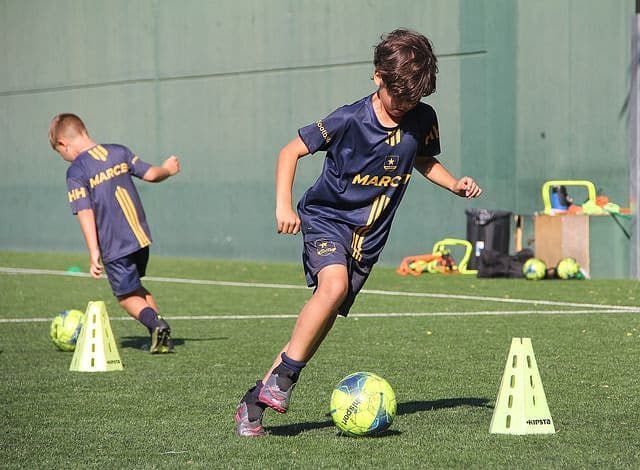
Let’s talk fair game time in grassroots football. It’s half-time. Your U11 team is losing 2-0. You look down your bench. Three players haven’t touched the pitch yet. They’re fidgeting, looking at their parents, wondering if they’ll get on.
You’re thinking: “If I put them on, we’ll probably lose by more. Should I just stick with my strongest players?”
This is the dilemma every grassroots coach faces. Win the game, or develop all the players?
Here’s the truth you need to hear: At grassroots level, fair game time is more important than winning.
This isn’t a nice-sounding platitude. It’s backed by research, FA guidance, and decades of evidence about what creates successful adult players and, more importantly, adults who still love football.
This article explains why fair playing time matters, how to implement it even when competitive pressure is intense, and how to handle the inevitable pushback from parents who think their child deserves more minutes.
What Is “Fair Playing Time”?
Let’s define terms first, because “fair” means different things to different people.
Fair Playing Time Does NOT Mean:
- ❌ Everyone plays exactly the same minutes
- ❌ No substitutions based on performance
- ❌ Ignoring attendance or commitment
- ❌ Players automatically starting regardless of effort
Fair Playing Time DOES Mean:
- ✅ Every player who trains regularly gets meaningful game time (20+ minutes)
- ✅ Rotation of positions so players experience different roles
- ✅ Decisions based on long-term development, not just this week’s result
- ✅ Transparent policies that parents understand from day one
- ✅ Balancing winning with ensuring all players develop
Age-appropriate guidelines:
- U6-U10: Everyone plays at least 50% of every match
- U11-U13: Everyone plays at least 40% of every match (half a game minimum)
- U14-U16: Everyone plays at least 30% of matches (varies more based on form/commitment)
Why Fair Game Time Matters: The Research
1. Match Time = Development
Players develop through playing, not watching. A study by UEFA found that players who received regular game time between ages 10-14 were significantly more likely to:
- Still be playing football at age 18 (85% vs 42%)
- Reach higher levels (academy or semi-pro)
- Have better technical skills in their late teens
Why? Match situations provide learning you can’t replicate in training:
- Decision-making under pressure
- Physical and mental resilience
- Reading the game
- Confidence in competition
A player sitting on the bench for 40 minutes learns nothing. A player playing 20 minutes learns volumes.
2. Early Success Doesn’t Predict Later Success
The player dominating at U10 is often just physically mature early. Research shows:
- 60% of U10 “star players” don’t make their U16 team
- 40% of U16 academy players weren’t standouts at U10
- Late physical developers often surpass early developers by U16-U18
Translation: The kid you’re benching at U11 because they’re smaller? They might be your best player at U15.
If you only give minutes to current top performers, you’re:
- Missing future talent
- Stunting development of late bloomers
- Making decisions based on temporary physical advantages
3. Retention Matters More Than Results
Here’s a stat that should wake up every grassroots coach:
70% of children quit organized football by age 13.
The number one reason (according to FA research): “I wasn’t playing enough.”
Kids don’t quit because they’re losing matches. They quit because they’re standing on the sideline watching their teammates play.
What’s the point of winning at U12 if half your squad quits before U13?
4. Social and Emotional Development
Playing time isn’t just about football skills. It’s about:
- Confidence: Players who play regularly develop self-belief
- Belonging: Being part of the team means actually being on the pitch
- Resilience: Learning to deal with mistakes only happens when you’re playing
- Enjoyment: Football is fun when you’re playing, boring when you’re watching
The player who gets 10 minutes at the end of a 5-0 loss doesn’t feel like they’re part of the team. They feel like they’re there to make up numbers.
The “But We Need to Win” Argument
Let’s address the elephant in the room. Coaches face pressure to win:
- League tables are published
- Parents compare teams
- Clubs want success
- Coaches’ egos get tied to results
Here’s the reality check:
At U6-U12: Results Don’t Matter (At All)
- No professional scout cares if you won your U9 league
- Players don’t remember the score from when they were 10
- Parents forget league positions after one season
- The FA explicitly states: development over results at this age
What they WILL remember:
- Whether they enjoyed playing
- If their coach believed in them
- How they felt on the pitch
At U13-U16: Results Matter a Bit More (But Not Much)
Competitive instinct develops. Winning feels good. That’s healthy.
But:
- Long-term development still trumps short-term results
- Players learn more from competitive matches (win or lose)
- Squad depth matters (overplaying your best 11 causes injuries)
The best teams at U16 aren’t the ones who won at U12. They’re the ones who developed ALL their players, kept them engaged, and built squad depth.
How to Implement Fair Playing Time
Strategy 1: The Rotation System
How it works:
- Divide squad into groups (A and B, or 1/2/3)
- Rotate who starts and who subs
- Over a season, everyone gets roughly equal starts
Example (16-player squad, 11-a-side):
- Match 1: Group A starts (11 players), Group B subs (5 players)
- Match 2: Group B starts (majority), Group A subs (majority)
- Continue rotating
Benefits:
- Everyone knows they’ll start some matches
- Players accept rotation more easily
- Squad stays engaged
Strategy 2: The Minimum Minutes Policy
Set clear rules:
- “Every player who attends training gets minimum 20 minutes per match”
- “Everyone plays at least one half over a two-match period”
- “No player sits out entire match unless injured”
Make it public:
- Share policy with parents at season start
- Post it on team app
- Refer to it when questioned
Strategy 3: The Position Rotation System
Especially effective for U10-U13:
- No fixed positions until U14
- Players rotate through different roles
- Your striker plays defense sometimes
- Your defender gets to attack
Benefits:
- Players develop versatility
- Late developers get to try all positions before specializing
- Players understand teammates’ roles better
- More engaged (variety prevents boredom)
Strategy 4: The “Earn Your Minutes” Model (U14+)
For older age groups where competition is healthy:
- Base playing time on training attendance and effort
- Still ensure everyone gets minimum 30% game time
- Reward consistent performers with more minutes
- Transparent criteria (not coach’s favorites)
Criteria might include:
- Training attendance (80%+ gets priority)
- Effort in training
- Current form
- Tactical fit for specific opponent
What About Competitive Matches?
“Fair playing time is great for friendlies, but what about cup finals?”
Fair question. Here’s the nuanced answer:
League Matches (Most Matches)
Apply fair playing time rules. These are developmental matches. Every player deserves opportunities.
Cup Finals, Tournaments, Big Games
You can be slightly more selective, BUT:
- Still bring your whole squad
- Still use subs (not just at 85th minute)
- Still give bench players meaningful minutes if possible
The key: Don’t make EVERY match feel like a cup final. If you’re playing your “best XI” for 95% of games, you’re doing it wrong.
Reality Check
Most grassroots football is regular league matches. Cup finals are rare. Don’t use the “but it might be a cup final” excuse to justify benching players every single week.
Handling Parent Pushback
Scenario 1: “My Child Should Be Starting Every Game”
Parent says: “Jake is one of your best players. Why is he being subbed?”
Your response:
“I understand Jake’s talented. That’s exactly why I’m developing him as a complete player by having him experience different match situations, including coming off the bench and learning to impact games from subs. Plus, our rotation policy ensures all players develop—Jake benefits from playing with teammates who are also improving through game time. Long-term, this approach creates better players AND a stronger team.”
Scenario 2: “My Child Isn’t Playing Enough”
Parent says: “Sophie only got 15 minutes today. That’s not fair.”
Your response:
“I hear your concern. Let me share Sophie’s playing time over the last four matches—she played 25, 20, 30, and 15 minutes. We rotate the squad to ensure everyone develops. This week she had less time, but over the month she’s averaging 22 minutes per match, which meets our minimum policy. Next match she’ll start. Would you like to discuss her development areas so she can maximize her minutes?”
Scenario 3: “We’re Losing Because You’re Not Playing the Best Players”
Parent says: “If you’d just play your strongest XI every week, we’d be winning.”
Your response:
“Our goal isn’t to win at U11—it’s to develop players for U14, U16, and beyond. Research shows teams that rotate squads at this age actually outperform by U16 because they’ve developed more players. Plus, players learn more from challenging matches than easy wins. I appreciate your passion for the team, but our focus is long-term development.”
When Playing Time Can Be Reduced
Fair playing time doesn’t mean ignoring behavior or commitment:
Acceptable Reasons to Reduce Minutes:
- ✅ Poor training attendance (less than 50%)
- ✅ Behavioral issues (not following team rules)
- ✅ Lack of effort in training
- ✅ Disciplinary reasons (after warnings)
Unacceptable Reasons:
- ❌ “They’re not good enough” (at U8-U13, everyone deserves to play)
- ❌ “We need to win this match” (development > results)
- ❌ Parents didn’t pay subs (never punish child for parent’s actions)
- ❌ Coach’s personal preference
Important: Any reduction in playing time should be:
- Communicated clearly to player and parent
- Linked to specific, addressable behavior
- Temporary (path back to full minutes)
The Long-Term Benefits of Fair Playing Time
For Individual Players:
- Develop confidence through regular match experience
- Learn multiple positions (become versatile)
- Stay in love with football (don’t quit from frustration)
- Build resilience (experience different match situations)
For Your Team:
- Better retention (players don’t quit)
- Stronger squad depth (more match-ready players)
- Less injury risk (not overplaying same players)
- Better team culture (everyone feels valued)
For Your Club:
- Positive reputation (player-development focused)
- More players stay through to older age groups
- Parents recommend club to others
- Sustainable growth
Real-World Examples
Case Study 1: The Winning Team That Fell Apart
The situation: U11 team won their league playing the same 11 players every week. Bench players got minimal minutes.
U12 season: Five bench players quit. Three “star” players moved to bigger clubs. Team struggled with only 13 players.
U13 season: Team disbanded. Not enough players.
Lesson: Short-term success (winning at U11) led to long-term failure (no team at U13).
Case Study 2: The Rotating Squad That Succeeded
The situation: U10 coach implemented strict rotation. Everyone played minimum 30 minutes every match. Finished mid-table.
U12 season: All players still with team. Squad depth strong. Finished 3rd.
U14 season: Late developers now among best players. Won league.
Lesson: Investment in all players early pays off later.
Sample Playing Time Policies
Policy Example 1 (U8-U12):
Playing Time Commitment:
- Every player who attends training regularly (70%+) will play minimum 50% of every match
- Players will rotate through different positions
- No fixed starting XI—rotation ensures everyone experiences starting and coming off bench
- Playing time reduced only for: poor attendance, behavioral issues (after warning)
Policy Example 2 (U13-U16):
Playing Time Commitment:
- All squad members play minimum 30 minutes per match over a two-match period
- Training attendance and effort influence starting positions
- Form and tactical fit determine minutes in competitive matches
- Transparent criteria for selection (not arbitrary)
The Bottom Line
Fair playing time isn’t about being soft or not caring about results. It’s about:
- Understanding child development: Players develop through playing
- Playing the long game: U11 results don’t matter; U16 development does
- Building a sustainable team: Retention matters more than trophies
- Creating lifelong players: Kids who play stay in football
Will you lose some matches because you rotate your squad? Probably.
Will your players develop better, stay in football longer, and enjoy the game more? Absolutely.
And here’s the kicker: By U14-U16, the teams that rotated squads at younger ages often outperform the ones that didn’t—because they developed MORE players, kept them engaged, and built proper squad depth.
Fair playing time isn’t idealism. It’s smart coaching.
Track playing time fairly and transparently: Ballrz lets you record minutes played, ensure rotation, and share playing time stats with parents.
Leave a Reply