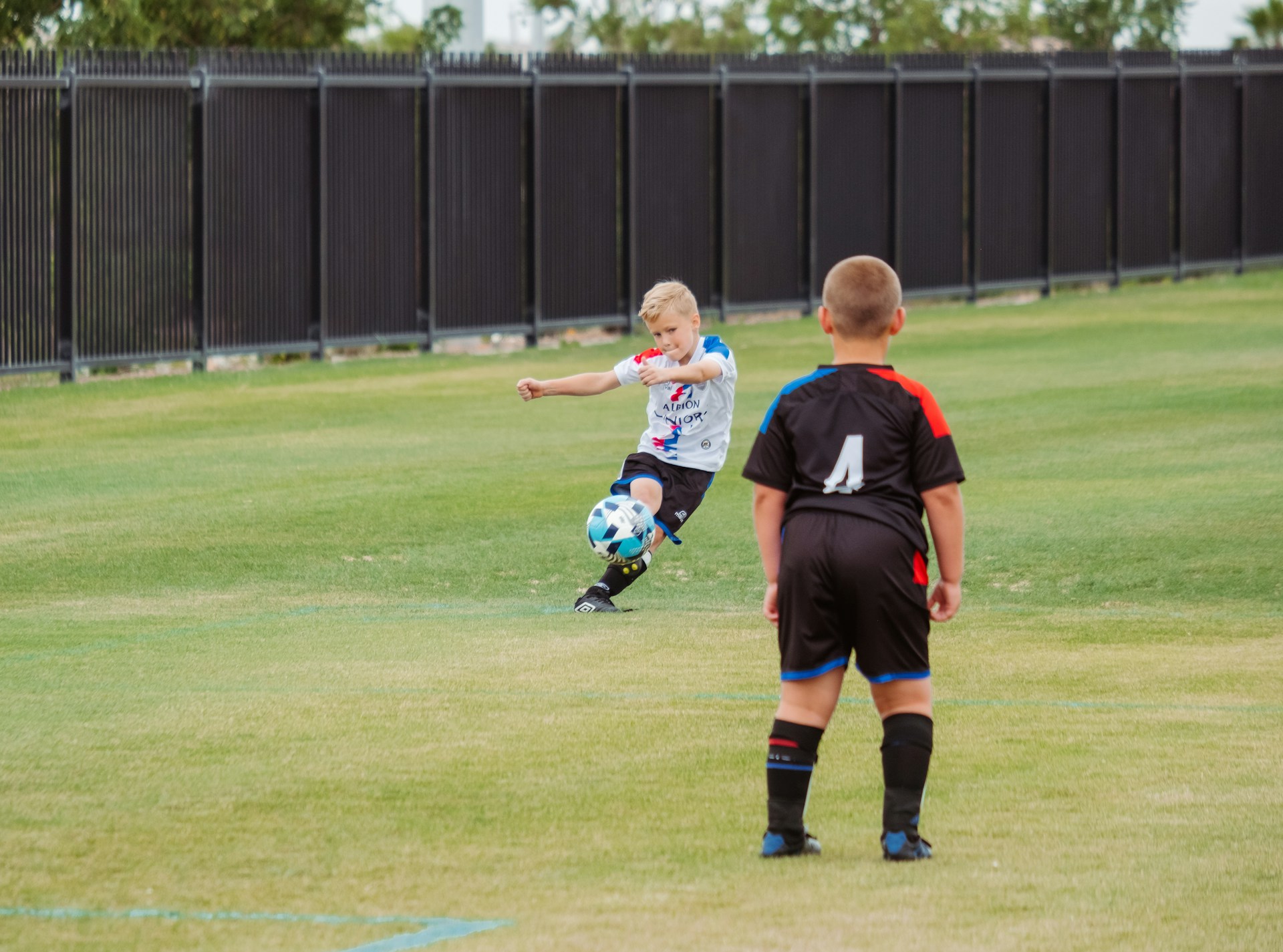
You’ve planned a brilliant training session. You’ve got the drills ready, the cones laid out, and fifteen minutes of explanation prepared. Then one player starts bouncing a football during your team talk. Two others are wrestling in the background. Someone’s doing keepy-uppies instead of listening.
Sound familiar?
Managing player behaviour is one of the biggest challenges in grassroots football coaching, especially with younger age groups. But here’s the truth: disruptive behaviour usually isn’t about difficult kids. It’s about how we structure our sessions and respond to normal childhood energy.
Let’s fix it.
Understanding Why Players Misbehave
Before you label a child as “difficult” or “disruptive,” take a step back. In most cases, what looks like bad behaviour is actually:
Boredom. Kids have short attention spans. If you’re talking for five minutes straight, you’ve lost them. They’re not being rude—they’re being eight years old.
Excess energy. They’ve been sitting in school all day. They come to football to run and play, not to stand around listening to tactical explanations.
Seeking attention. Some kids act up because it gets a reaction. Even negative attention feels better than being ignored.
Not understanding what’s expected. If you haven’t been clear about training rules and expectations, they don’t know they’re doing anything wrong.
External factors. Sometimes behaviour has nothing to do with football. Problems at home, school struggles, or friendship issues all spill over into training.
Understanding the “why” helps you respond appropriately instead of just getting frustrated.
The Golden Rules of Behaviour Management
1. Less Talk, More Action
Here’s a simple test: time how long you spend talking during your next session. If it’s more than 30 seconds at a time for Under 12s (or 60 seconds for older players), you’re talking too much.
Kids come to football to play football, not to listen to lectures. The longer you talk, the more behaviour problems you’ll have.
Instead:
– Keep instructions short and simple
– Demonstrate rather than explain
– Use small-sided games where players learn by doing
– Save feedback for natural breaks, not lengthy stoppages
2. Create Routines and Rituals
Children thrive on structure. When they know what to expect, they settle into it.
Establish a consistent training routine:
– Arrival activity (players have a ball and activity to do immediately when they arrive—no standing around)
– Warm-up (same format each week, players know what’s coming)
– Main session (clearly signposted transitions between activities)
– Cool-down and debrief (quick wrap-up, not a long lecture)
When players know the structure, there’s less room for misbehaviour because there’s always something they should be doing.
3. Set Three Non-Negotiables
You don’t need a long list of rules. In fact, long rule lists don’t work—kids can’t remember them.
Instead, establish three non-negotiables that you reinforce every session:
- Safety – We don’t hurt ourselves or others
- Respect – We listen when someone’s talking, we don’t laugh at mistakes
- Effort – We try our best
That’s it. Everything else can be flexible. But if someone threatens safety, shows disrespect, or stops trying, you intervene.
Make these clear at the start of the season, remind players at the start of each session, and be consistent about enforcing them.
4. Catch Them Being Good
Most coaches only comment when something goes wrong. This creates a negative environment where players are constantly waiting to be told off.
Flip it around. Actively look for players doing the right thing and acknowledge it:
- “Great effort there, Danny”
- “I love how you helped your teammate up, Sarah”
- “Nice listening, everyone”
This does two things: it reinforces positive behaviour, and it shows that good behaviour gets attention. Suddenly, acting up becomes less appealing.
Practical Techniques for Managing Disruption
For the Player Who Won’t Stop Talking
Don’t: Shout over them or get into a power struggle.
Do: Use the “tactical pause.” Stop talking mid-sentence, stand in silence, and wait. The player will notice. The group will notice. Social pressure does the work for you.
Or give them a job: “Jake, can you collect the cones for me?” or “Emma, you’re in charge of demonstrating this drill.”
For the Player Who’s Bouncing a Ball During Team Talks
Don’t: Assume they’re not listening. Some kids process information better when their hands are busy.
Do: Assess whether it’s actually a problem. If they’re bouncing a ball but still engaged, leave it. If it’s distracting others, quietly take the ball and give it back when you’re done talking.
Better yet: don’t have long team talks. Get them playing.
For the Players Wrestling or Mucking About
Don’t: Punish the whole team because two players aren’t paying attention.
Do: Separate them. Move one to the front of the group. Or give them an activity to do away from the main group (like dribbling around the pitch perimeter) while you work with the others.
If it’s persistent, have a quiet word afterward: “I need you to help me out here, mate. When you’re messing about, it makes it harder for everyone to learn.”
For Serious or Repeated Disruption
Sometimes you need consequences. But make them:
Proportionate. Sitting out for two minutes is reasonable. Missing the whole session is extreme.
Clear and immediate. “If you do X, Y will happen.” Then follow through.
Not punishment-based running. Never use physical exercise as punishment. Running should be associated with football and fitness, not with being in trouble.
Focused on the behaviour, not the child. “That behaviour isn’t okay” not “You’re being naughty.”
The Parent Conversation
If behaviour problems persist, you need to talk to the parents. Here’s how to do it without creating defensiveness:
1. Start with the positive. “Jamie’s got great energy and he’s really improved his passing…”
2. Describe specific behaviours, not character. “…but we’ve noticed he struggles to focus during drills and it’s affecting his development” not “he’s disruptive.”
3. Ask for context. “Is there anything going on at home or school that might be affecting him?”
4. Partner with them on solutions. “What works at home when he’s having trouble focusing?”
5. Set clear expectations. “I need your support to help Jamie get the most out of training. Can we agree that if this behaviour continues, he’ll sit out for 5 minutes to reset?”
Most parents will be supportive. They know their child better than you do, and they want them to succeed.
When to Consider Removing a Player
This is the nuclear option and should be rare. But sometimes a player’s behaviour is so disruptive that it’s unfair to the other 14 kids.
Before you get there, ask yourself:
- Have I been consistent in enforcing boundaries?
- Have I tried positive approaches first?
- Have I spoken to the parents?
- Is the behaviour a safety issue?
- Is my session structure part of the problem?
If you’ve tried everything and the answer is still that this player is making training impossible for everyone else, it might be time to have a difficult conversation with the parents about whether the team is the right fit.
But this should be a last resort after you’ve exhausted other options.
Real-World Example: Turning Around a “Difficult” Group
Mark coaches Under 9s. Last season, behaviour was a nightmare. Kids running off mid-drill, talking over him, constant disruption.
He made three changes:
1. Cut talking time by 75%. Demonstrations instead of explanations. Instructions in 20-second bursts, not 5-minute lectures.
2. Arrival activity. Kids now start with a ball and a simple task the moment they arrive. No standing around waiting for everyone to show up.
3. Positive reinforcement system. He started actively praising good behaviour instead of only commenting when things went wrong.
Within three weeks, the transformation was remarkable. Same kids. Completely different atmosphere.
The problem wasn’t the players. It was how the session was structured.
The Bottom Line
Most behaviour problems in youth football aren’t about “bad kids.” They’re about normal children with energy and short attention spans being asked to stand around and listen instead of playing.
Fix your session structure first. Then manage the remaining issues with clear boundaries, positive reinforcement, and consistency.
Remember: you’re working with children. They’re going to fidget, lose focus, and occasionally muck about. That’s not a behaviour problem—that’s childhood.
Your job isn’t to eliminate all disruption. It’s to create an environment where kids are engaged, learning, and developing—both as footballers and as people.
Keep sessions active, set clear expectations, catch them being good, and stay calm. The behaviour will follow.
Want better tools for managing your team? Ballrz helps you organize training, track player development, and communicate with parents—all in one place. Focus on coaching, not admin. Try it free at ballrz.app
Leave a Reply